
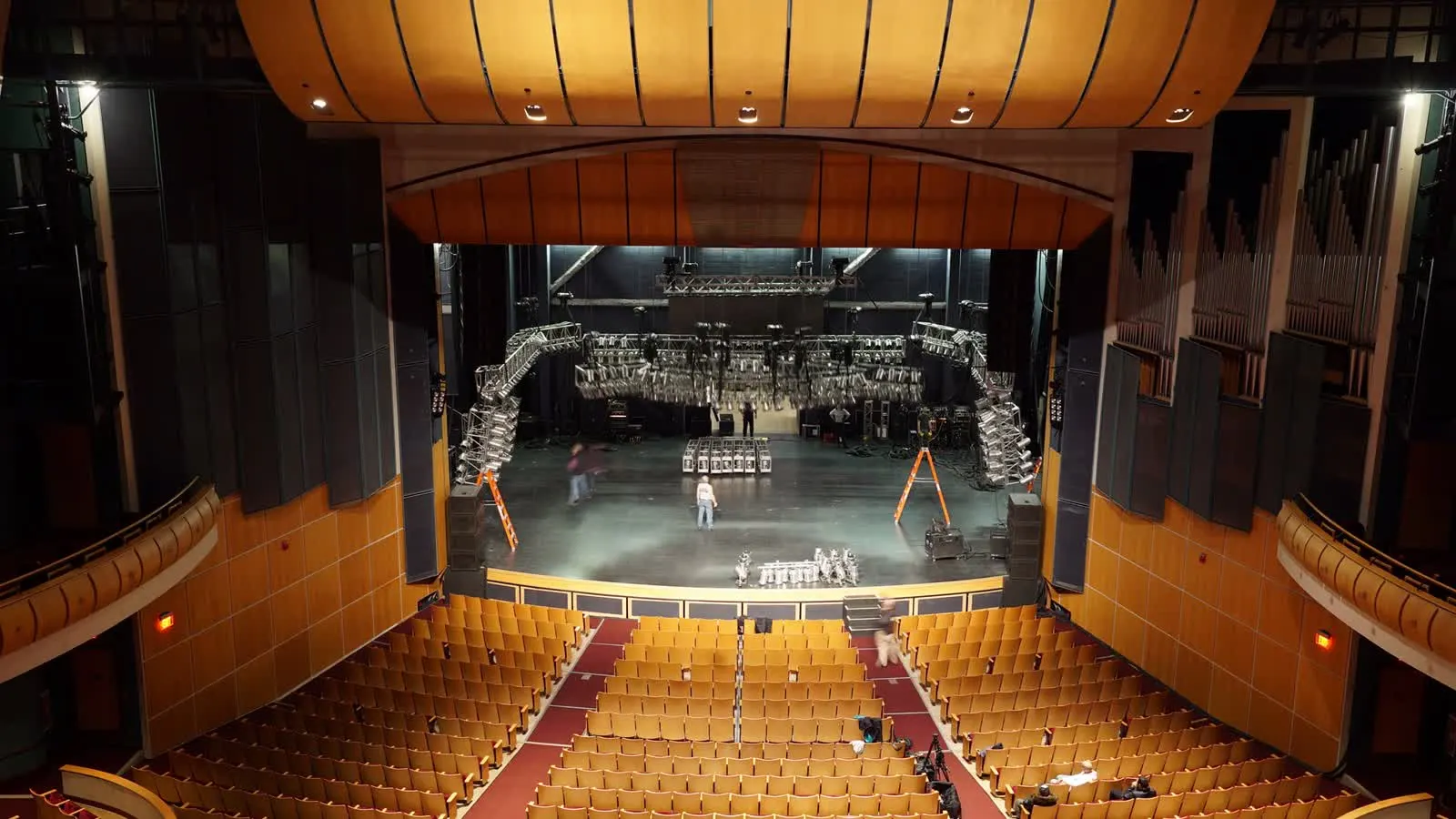
Translate the programme into spaces
Start with the running order, guest count, seating style, speakers, performers, catering and transitions. Draw each programme state on the latest floor plan. Include stages, screens, control positions, cameras, service routes, registration, accessibility and emergency routes.
Ask the venue for usable dimensions and capacities for the intended setup. Published capacity figures may assume a different layout and must be confirmed for the event. Identify shared areas, privacy limits and restrictions before the contract is treated as final.
- Guest, crew, supplier and accessible entrances
- Load-in route, lift sizes, loading area and storage
- Setup, rehearsal, event and breakdown hours
- Room turnover method and realistic changeover time
- Back-of-house, catering and waste routes
Confirm the technical baseline
Document what the venue includes and its condition: sound system, microphones, screens, projectors, lighting, rigging, internet and power. Ask whether approved suppliers are mandatory and who is authorised to connect or operate each system.
A qualified production supplier should calculate electrical loads, distribution and protection. Confirm rigging points and load limits through the venue and relevant specialists. Never infer safety from a previous layout or from photographs of another event.
Test sound, visuals and connectivity
Review sound limits, neighbouring spaces, microphone quantities, playback, interpretation and recording feeds. For screens, check viewing distance, aspect ratio, daylight, content resolution and backup playback. Build time for real content testing rather than using a placeholder until doors open.
If registration, streaming, remote speakers or event applications depend on connectivity, define bandwidth, network separation, support and fallback requirements. A general venue Wi-Fi statement is not a test result for the expected audience and workflow.
Make outdoor and safety decisions specific
Outdoor setups require an agreed alternative, weather decision process, secure structures, appropriate electrical methods and safe guest routes. The venue and competent suppliers must assess the actual location and conditions. Confirm security, medical, insurance and emergency responsibilities for the event rather than assuming they sit with one party.
TCEB’s One Stop Service separates logistics, people, security, insurance and tax questions. Use those headings to route specialist questions. Permits, imports, artist or worker status, aviation activity and other regulated work require current official or professional advice.
Sign off responsibilities, rehearsal and recovery
Issue a responsibility schedule naming the venue, client, coordinator and each supplier. Add delivery times, testing, rehearsals, content deadlines, approvals, backup equipment, incident escalation and breakdown. One current production schedule should link to the event running order.
Before final approval, walk through failure scenarios: delayed access, missing content, a speaker change, loss of a playback device, weather relocation or internet interruption. The response does not need theatrical complexity, but it needs an owner, a practical first action and a communication route.
Sources and checks
- TCEB: MICE One Stop Service — checked . Official overview of event-support processes including logistics, security, insurance, taxes and people.
- TCEB: MICE Sustainability — checked . Official sustainability resources used as a prompt for venue and supplier planning.